

- What’s a Car Lease? Explained
- Buying a Car, Explained
- Cost Comparison: Buying vs. Leasing
- How Mileage Affects Your Decision
- Understanding Depreciation and Its Impact
- Should You Buy Your Car at the End of the Lease?
- Common Mistakes People Make When Deciding
- Final Verdict: Should You Buy or Lease a Car?
- FAQs
Car prices continue to climb. In October 2025, Kelley Blue Book reported that the average cost of a new vehicle had surpassed $50,000, a new record. If you’re in the market for a vehicle, more than ever before, you may be weighing the question of whether it’s better to buy or lease a car.
Both of these options have their own pros, cons, and hidden costs that aren’t always obvious when you walk into a dealership. Ultimately, the right choice depends on how much you drive, how long you plan to keep your car, and whether you value long-term savings or short-term flexibility.
So, let’s break it down. We’ll explore car loans vs. leases and help you identify the best fit for your lifestyle and financial goals.
What’s a Car Lease? Explained
Leasing a car is similar to renting it for a fixed period of time, usually two to three years. Instead of paying for the full price of the vehicle, you pay only for the portion of the car’s value you use (its depreciation). This is why lease payments are often much lower than loan payments on a new car. While this can make leasing feel like the more affordable option, there’s more to it than that. Leasing comes with certain limitations that you have to factor into your decision.
A lease typically includes a mileage limit, usually around 10,000 to 12,000 miles per year. If you exceed that limit, you’ll owe additional charges, often to the tune of $0.15 to $0.30 per extra mile. That can add up quickly. At the end of the lease, you return the car unless you choose to buy it for the predetermined buyout price. Along the way, you’re also responsible for maintaining the vehicle and avoiding excessive wear and tear, which can tack on additional fees.
Pros and Cons of Leasing
Here are the benefits and drawbacks of leasing at a glance:
Pros
- Lower monthly payment than a new car loan
- During the lease, the car is under warranty for major repairs
- Easy upgrades to a new vehicle every two to three years
Cons
- Mileage limits restrict how often and how far you can drive without tacking on fees
- Wear and tear fees can apply for cosmetic damage beyond normal use
- You do not build ownership in the vehicle
Buying a Car, Explained
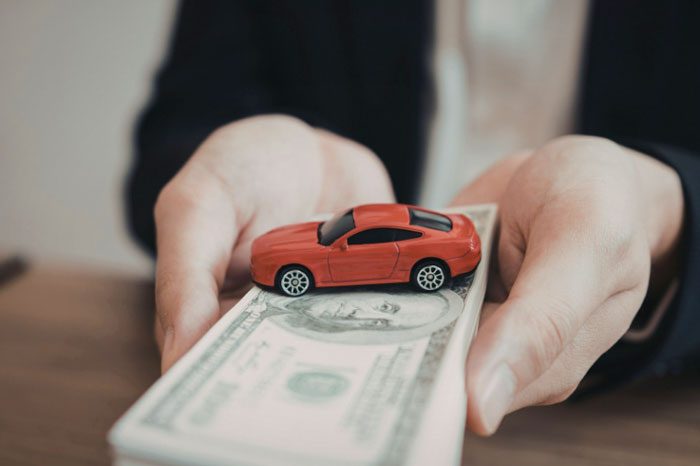
Buying a car, whether you finance it or pay cash, means the vehicle ultimately becomes yours. The initial payment and monthly loan amounts are usually higher than a lease, but you’re building equity and getting closer to ownership with every payment. Once the loan is paid off, your monthly payments end, which is where the real financial advantages of buying come in.
Ownership also gives you the freedom to drive as much as you want. You can also modify the vehicle or sell it whenever it suits you. But, it also comes with certain responsibilities. Once the warranty ends, you’re on the hook for repairs, which can be expensive. Buying also exposes you to depreciation, which affects the car’s resale value if you decide to trade it in down the road.
Pros and Cons of Buying
In short, the pros and cons of buying a car include:
Pros
- Often costs less over the long run if you keep the car for five years or longer
- No mileage limits, so you can drive as much as you want
- No end-of-lease wear-and-tear fees for returning the vehicle
Cons
- Frequent trade-ins can erase expected savings
- Higher upfront costs and higher monthly payments
Cost Comparison: Buying vs. Leasing
When comparing the cost of buying versus leasing a car, it’s important to consider more than just the monthly payment. Leasing often appears cheaper because the payment is calculated using the vehicle’s projected depreciation. However, leases can include acquisition fees, disposition fees, and mileage penalties that raise the total cost.
Buying a car costs more upfront and month-to-month, but over a five- to 10-year period, it usually results in significantly lower total ownership costs. A financed car eventually becomes an asset you can sell or trade, and once the loan is paid off, you have years of payment-free driving.
Let’s compare six years of owning a car vs. leasing a car with a $35,000 sticker price. If you buy the car with 10% down ($3,500) and finance the remaining $31,500 for 60 months at 6% APR, your monthly payment would be about $609. You’d pay about $40,039 total, including the down payment.
After six years, say you’ve spent $1,800 on repairs and now want to sell the car for roughly 45% of its original price ($15,750). Your estimated net cost comes out to about $26,089.
Let’s say you lease the same car twice in back-to-back three-year leases. With about 6% equivalent financing, 8% tax on the payments, and $2,500 due at signing each time, the payment comes out to around $586 a month, or about $42,196 over six years. This doesn’t include any additional mileage or penalty fees.
In this scenario, leasing ends up costing over $16,000 more over six years, mainly because you made payments the whole time, but you don’t have a vehicle to sell at the end of the day.
How Mileage Affects Your Decision
Mileage is another key factor when determining whether it’s better to buy or lease a car. Lease agreements assume a certain amount of usage. If you regularly exceed your limit—say 12,000 miles per year—the penalties for going over can quickly negate any savings you gained from the lower monthly payments.
High-mileage drivers almost always save more money by buying. Owning the vehicle eliminates the risk of per-mile overage charges and gives you the freedom to drive without constantly watching the odometer. Leasing works best for people with predictable driving habits and short commutes, who make minimal road trips.
Understanding Depreciation and Its Impact
Depreciation plays a major role in both buying and leasing. New cars can lose as much as 30% of their value in the first two years. Leasing transfers the risk of depreciation to the leasing company, which is why it can feel safer for people who worry about resale value.
But if you choose a vehicle known for retaining value, buying can be a more attractive option. Cars with high resale values cost less to own long-term, because you recapture more of their value when you eventually sell or trade them in. On the other hand, if you buy a car that depreciates rapidly, your total ownership cost increases substantially.
Here’s a real-life example. In 2025, KBB noted the five-year resale value of a Toyota Tacoma was an impressive 64.1%, beating the 44.6% average. Meanwhile, Forbes reported that the Jaguar i-Pace EV—which is no longer in production—lost a staggering 72% of its value within five years. In second place for the worst resale value was the BMW 7 Series sedan, which loses over 67% of its value.
Should You Buy Your Car at the End of the Lease?
Lease buyouts have become increasingly popular, especially as used-car prices continue to climb. A buyout might make sense if the market value of the car is higher than the predetermined buyout price in your contract. This would give you immediate equity and allow you to keep a vehicle you’re already comfortable with.
However, a buyout isn’t always the best move. If the car has mechanical problems or the buyout price is much higher than its resale value, you’re better off returning it and exploring other options. Always compare the buyout price to the car’s current market value before making the decision.
Common Mistakes People Make When Deciding
Many people underestimate how much they drive or overlook fees associated with leasing. Others focus too heavily on the monthly payment rather than the total cost, leading them to choose an option that costs more over time. Another common mistake is ignoring the interest rate (or “money factor”) when comparing leases—it can dramatically affect the monthly payment.
Another overlooked factor is how long you plan to keep the car. If you enjoy driving the newest model every few years, leasing might be the better fit for your lifestyle. But if you prefer long-term value, buying will win out almost every time.
Final Verdict: Should You Buy or Lease a Car?
So, is it better to buy or lease a car? Ultimately, it comes down to your priorities. Leasing offers lower payments, predictable costs, and the appeal of driving a brand-new car every few years. Buying requires more commitment upfront but gives you long-term savings, unlimited mileage, and full ownership.
Is your priority long-term financial value? If so, then buying is typically the better option. Is your priority short-term affordability and convenience? Leasing may give you more flexibility.
FAQs
Is It Cheaper to Buy or Lease a Car?
Leasing is cheaper in the short term because your monthly payments are lower. Buying becomes cheaper over time since you build equity in the car and eventually eliminate monthly payments. If you plan to keep a car for several years, buying typically saves more money.
Is Leasing a Car a Waste of Money?
Leasing isn’t a waste if your priority is lower monthly payments and driving a new car every few years. However, it costs more in the long run because you never own the vehicle, unless you buy it at the end of your lease. In that case, the market value of the car will determine whether or not it’s a good deal. For long-term value, buying upfront is usually the better financial choice.
Does Leasing Hurt Your Credit Score?
Leasing affects your credit the same way a loan does. On-time payments help build your score, and late payments will hurt it. Opening a lease may cause a small temporary dip due to a hard credit inquiry.
Can You Negotiate a Lease?
Yes, you can negotiate the car’s price, money factor, fees, and sometimes even the mileage allowance. Negotiating these terms can result in a lower monthly payment and total cost. You could potentially save thousands simply by negotiating the sale price before discussing lease terms.
What Happens at the End of a Car Lease?
At the end of the lease, you can return the car, buy it, or lease a new one. The vehicle will be inspected for mileage overages and wear-and-tear. If the buyout price is favorable to you, purchasing the car can sometimes be the best financial move.
Author

Michaela Bennett
NeatPenny contributor
Michaela Bennett believes that financial empowerment is a key factor in living a successful, stable, and sustainable life. With a background in economics and experience running a small business, Michaela has a passion for helping others find their footing when it comes to personal finance. She has over a decade of experience in financial writing, having a special interest in entrepreneurship, wealth building, and achieving financial milestones.